
When Color Becomes Language: Expressing BPD Through Open Impressionism
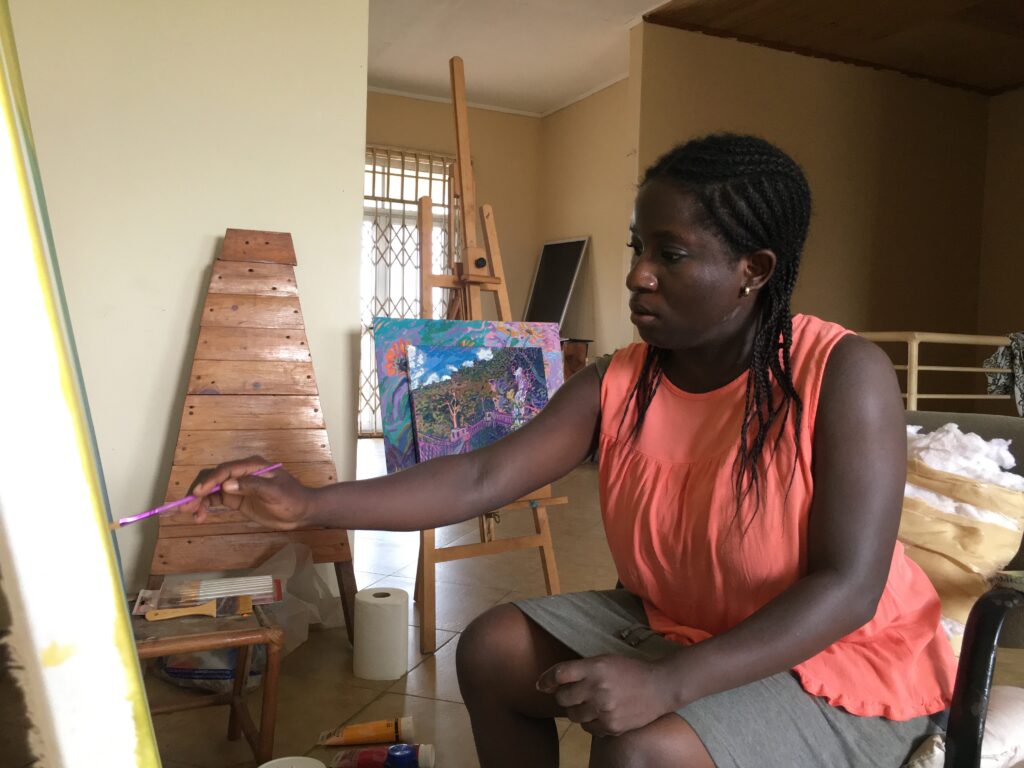
There are moments when words fail — when emotion becomes too vast, too tangled to articulate. That is where color begins to speak for me.
Living with Borderline Personality traits means my emotions rarely arrive one at a time. They crash like waves, overlapping and consuming, demanding release. I used to retreat into silence, unable to explain what I felt, unwilling to destroy close relationships with friends and family by speaking my mind. But when I discovered open impressionism, I found a new language — one made of color, texture, and rhythm.
Each hue became a word. Each brushstroke, a sentence.
Through paint, I could say everything that once overwhelmed me. Layering colors without blending allowed me to honor the coexistence of opposites—the joy inside sadness, the clarity within chaos. With a limited palette of 5 colors, the possibilities are endless. Each color mix is so unique and in combination with the underpainting, it allows me to push the boundaries of implied color into places that I never thought could be possible.
When I paint, I don’t chase perfection; I chase truth.
Sometimes that truth is jagged and raw, sometimes tender. Open impressionism gives me permission to be both—to leave parts of the underpainting visible, to show that healing doesn’t require erasure. It’s a philosophy that mirrors life: beauty and fracture existing side by side.
Art became my therapy before I even understood why.
It became the one space where my emotions weren’t too much—they were material. Where intensity wasn’t dangerous—it was art.
Now, when I look at my canvases, I see emotional topographies—maps of what it means to feel deeply and survive it.
Join my studio newsletter and tell me: what color speaks for your emotions today? The colors we find ourselves revolving towards often tell a lot about who we are.
